Pulse is a complete, full-stack fitness studio application in Java. Members book classes for themselves and their children, open the door with a pass on their phone, pay for their membership and train with friends; trainers run their classes and follow heart rate zones live; the front desk checks people in and takes walk-ins; the owner reads the numbers and fills the quiet classes. Use it to build your own gym, studio or club app with Codename One.
Generate your project · Read the user’s guide · Browse the source
In the Initializr, choose the Pulse fitness studio template, set your application name and package, and generate the project. The application source is licensed under MIT-0: you can modify it, use it commercially and keep your changes private without royalties.
What comes with the application?
| Part | Included workflows |
|---|---|
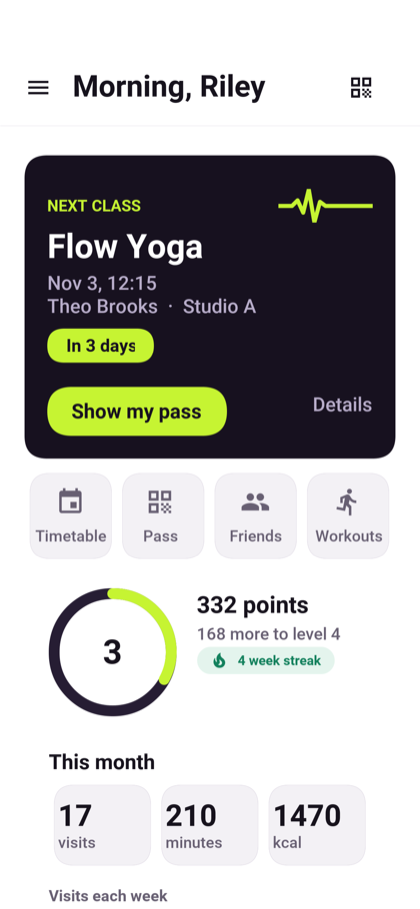
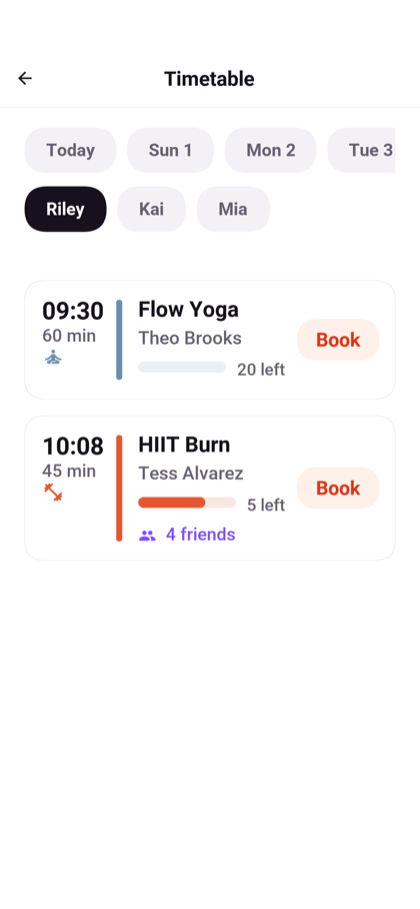
| Member | Book classes or join the waitlist, book for children in the household, show a rotating QR door pass, join, change, freeze and cancel plans, declare away periods, see visits and workouts, add friends, give kudos and invite friends to a class |
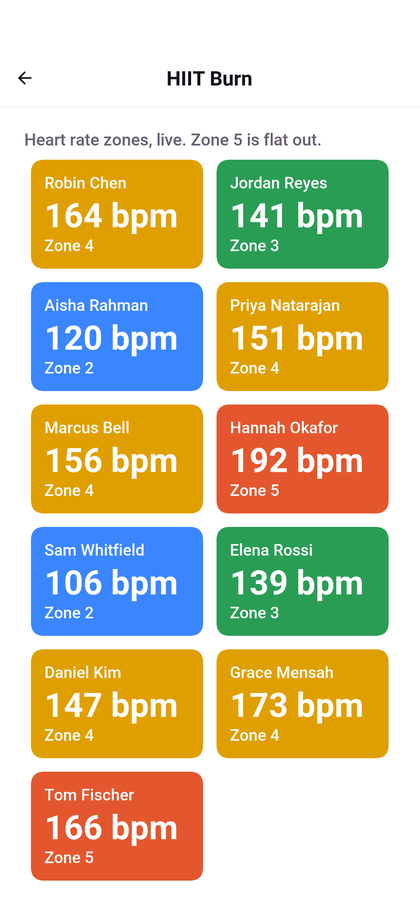
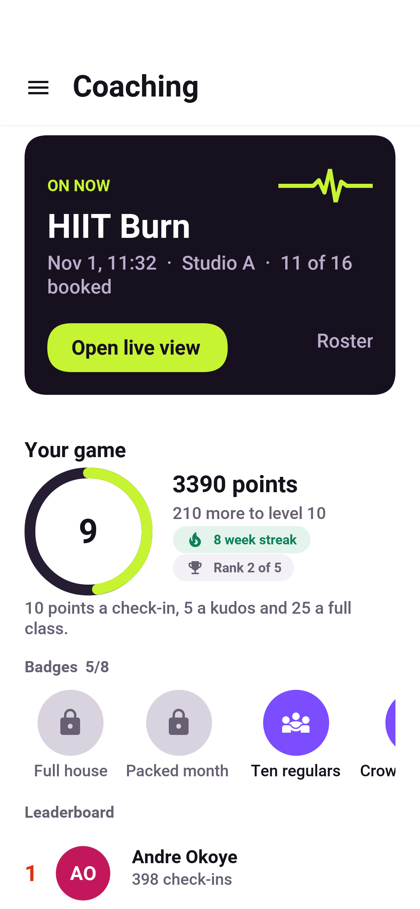
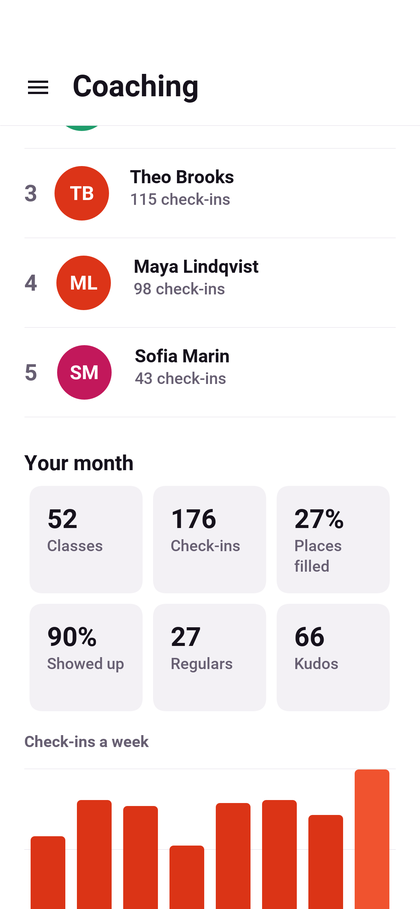
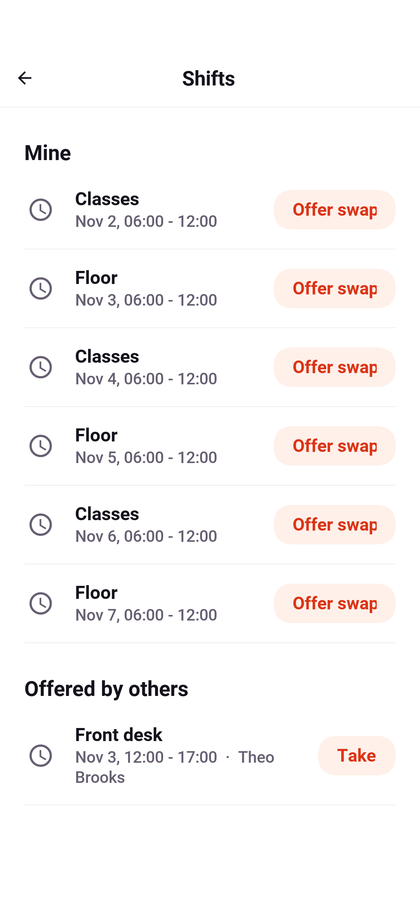
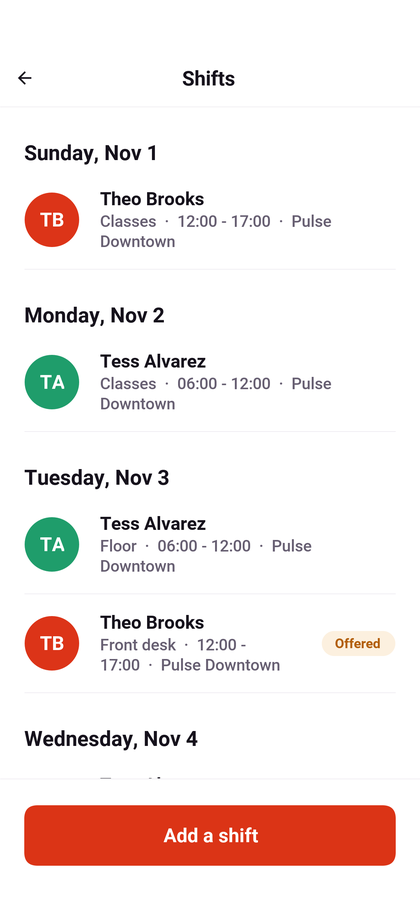
| Trainer | See the week’s classes and rosters, mark attendance, follow members’ heart rate zones live in class, see their month (classes, check-ins, fill, attendance, regulars, kudos), offer and take shifts |
| Front desk and kiosk | Check people in by QR pass, NFC fob or name with a reason for every refusal, record guests, day passes and trials, run a door kiosk on a tablet |
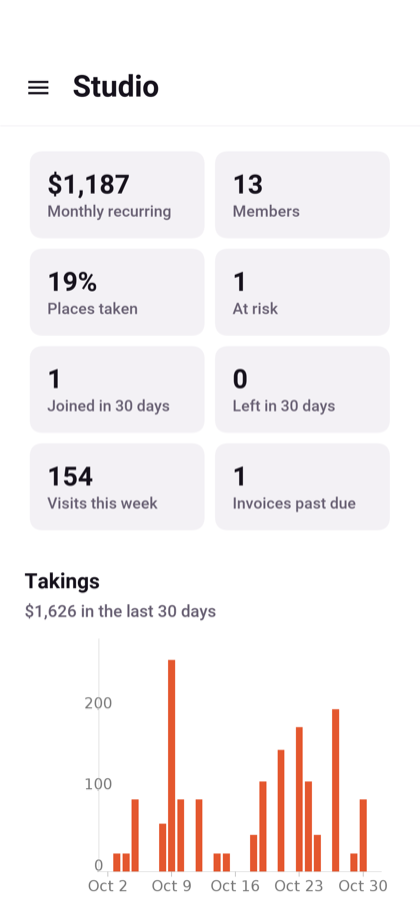
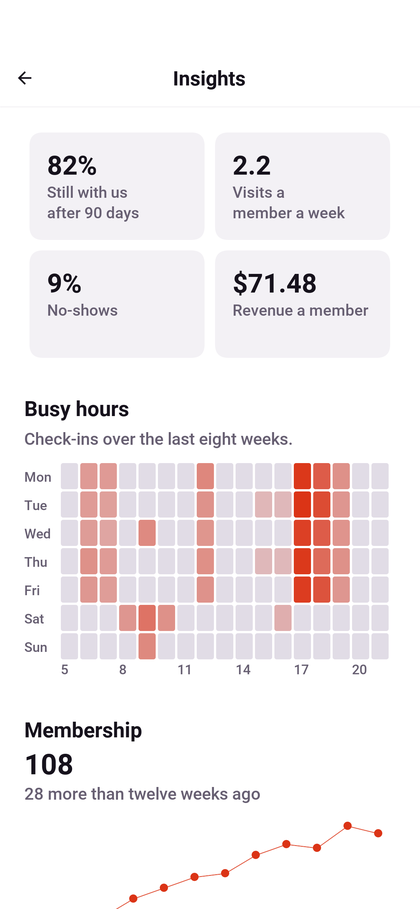
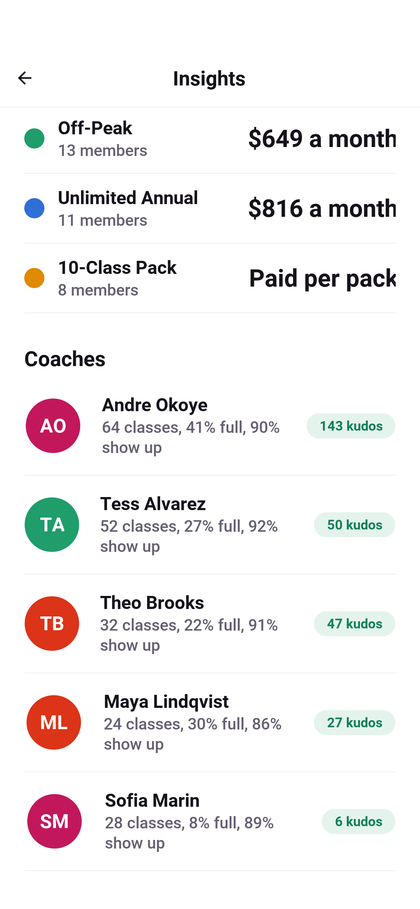
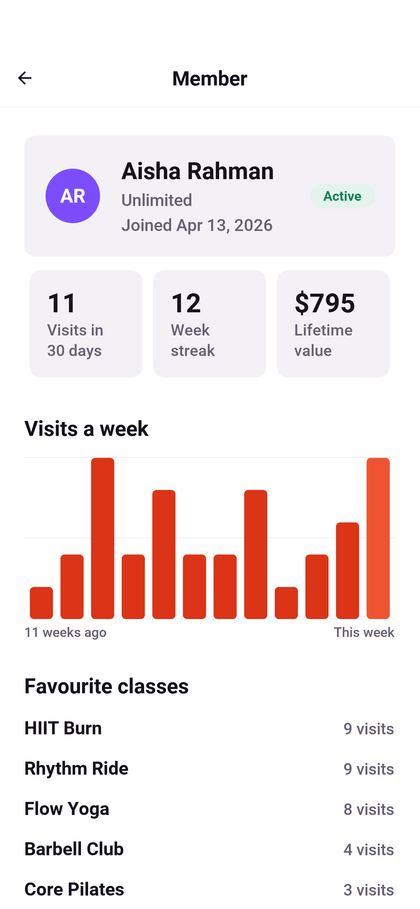
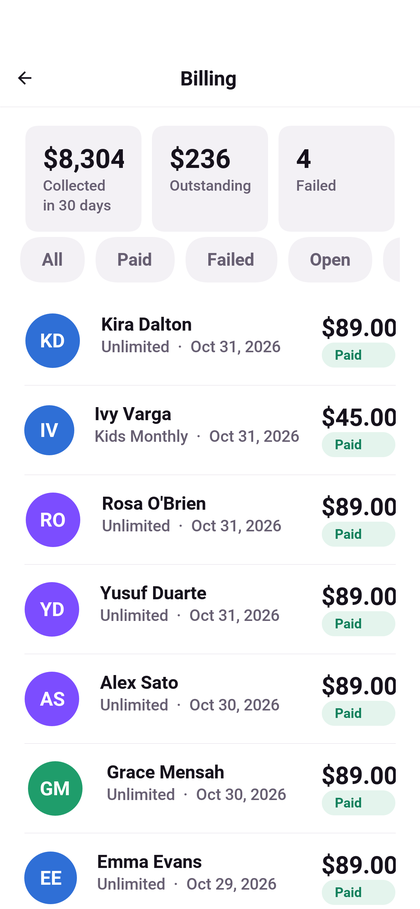
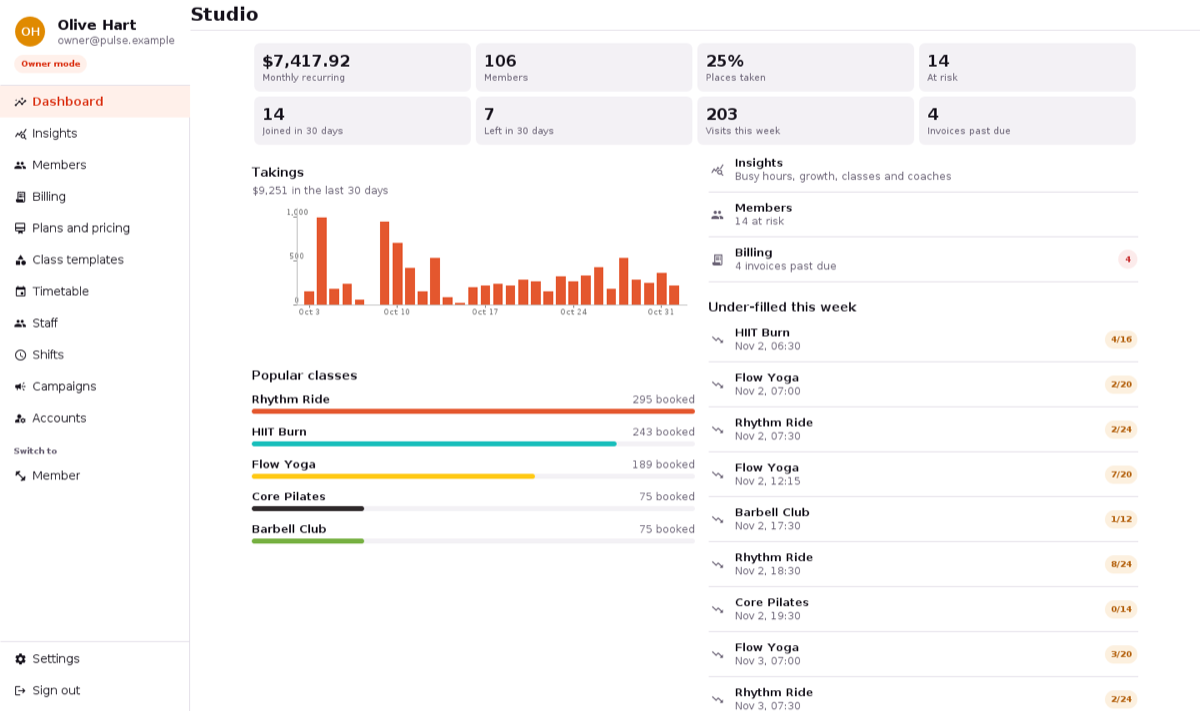
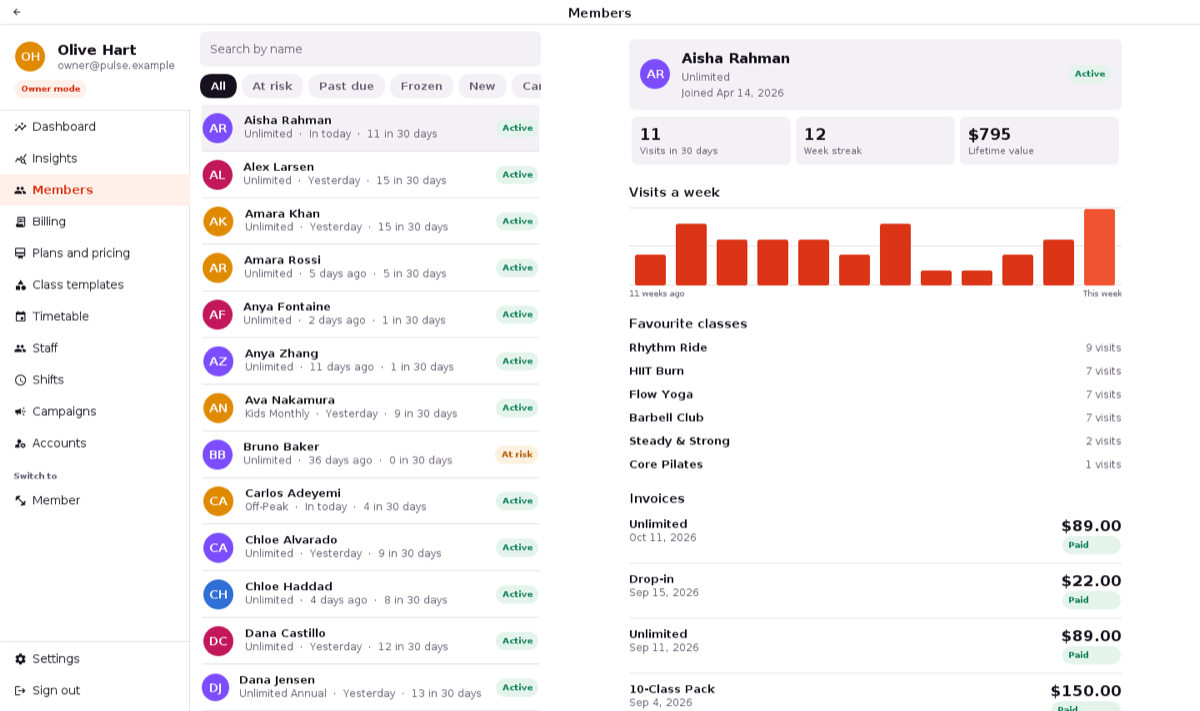
| Owner | Monthly recurring revenue, utilisation, members at risk and under-filled classes; insights with busy hours, retention, membership growth, class fill and no-shows, plan mix and coach rankings; a searchable member list with each member’s history; billing with failed charges and voids; plans, timetable, staff and campaigns |
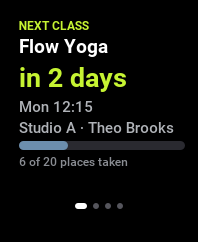
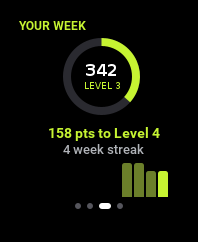
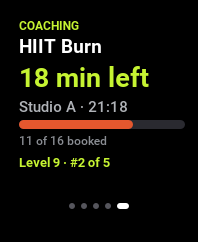
| Watch | Next class with a countdown, the door code, points, level and streak, and the classes coming up |
| Java backend | Accounts and roles, households, bookings that never oversell, door passes, subscription billing with proration, freezes and a dunning ladder, automatic class-filling and we-miss-you nudges with quiet hours, live updates over WebSocket |
| Shared code | API contracts and data classes shared between the client and server |
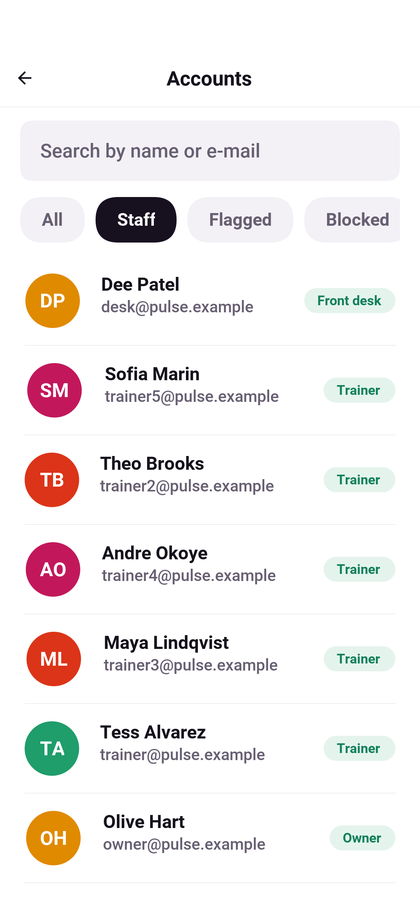
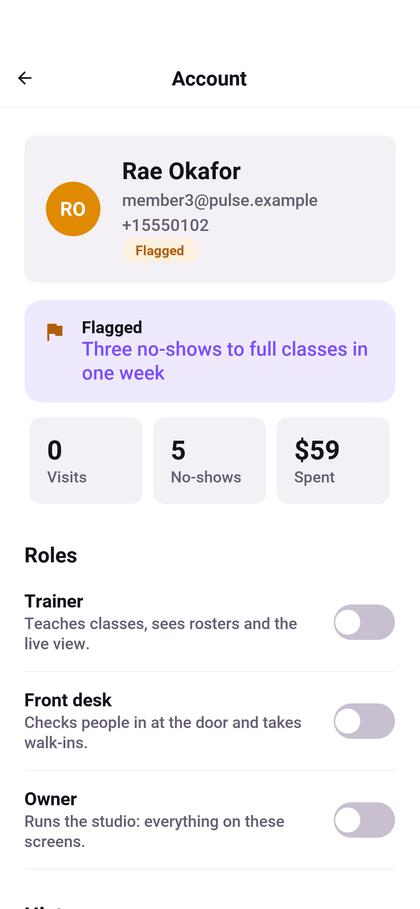
The account’s roles decide which screens a person sees. The same client project targets iOS, Android, desktop and the web, and the server runs on SQLite, PostgreSQL, MySQL and MariaDB.
From first run to customization
- Run the project. The development profile needs nothing installed: an in-memory database, a demo studio with two locations and a full timetable, demo accounts for every role and simulated cards.
- Try every role. The user’s guide walks through the member, trainer, front desk and owner screens with the demo accounts and test cards.
- Customize and deploy. The implementor’s guide covers booking, the door pass, billing, nudges, providers, the database and what a studio needs before launch.
What does a live studio still need?
Pulse supplies the connected application and its source. Running a studio on it also requires your own hosting, a payment processor, waiver and consent text for your jurisdiction, door hardware integration and provider configuration. The implementor’s guide lists them.
Other full-stack samples
Savor is a food-delivery service, Wayline a ride-hailing service and Bastion a security-first bank, all on the same architecture.