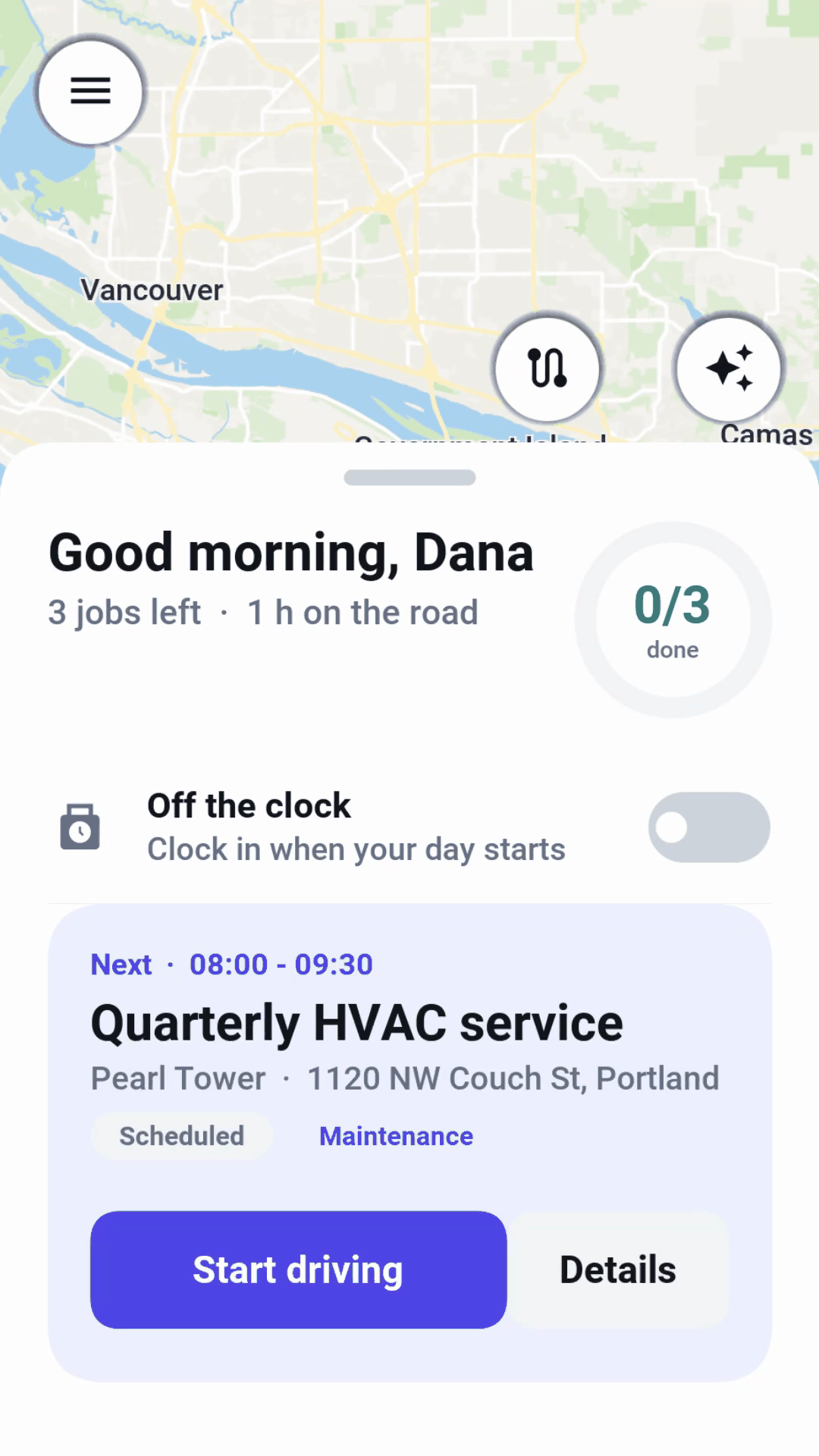
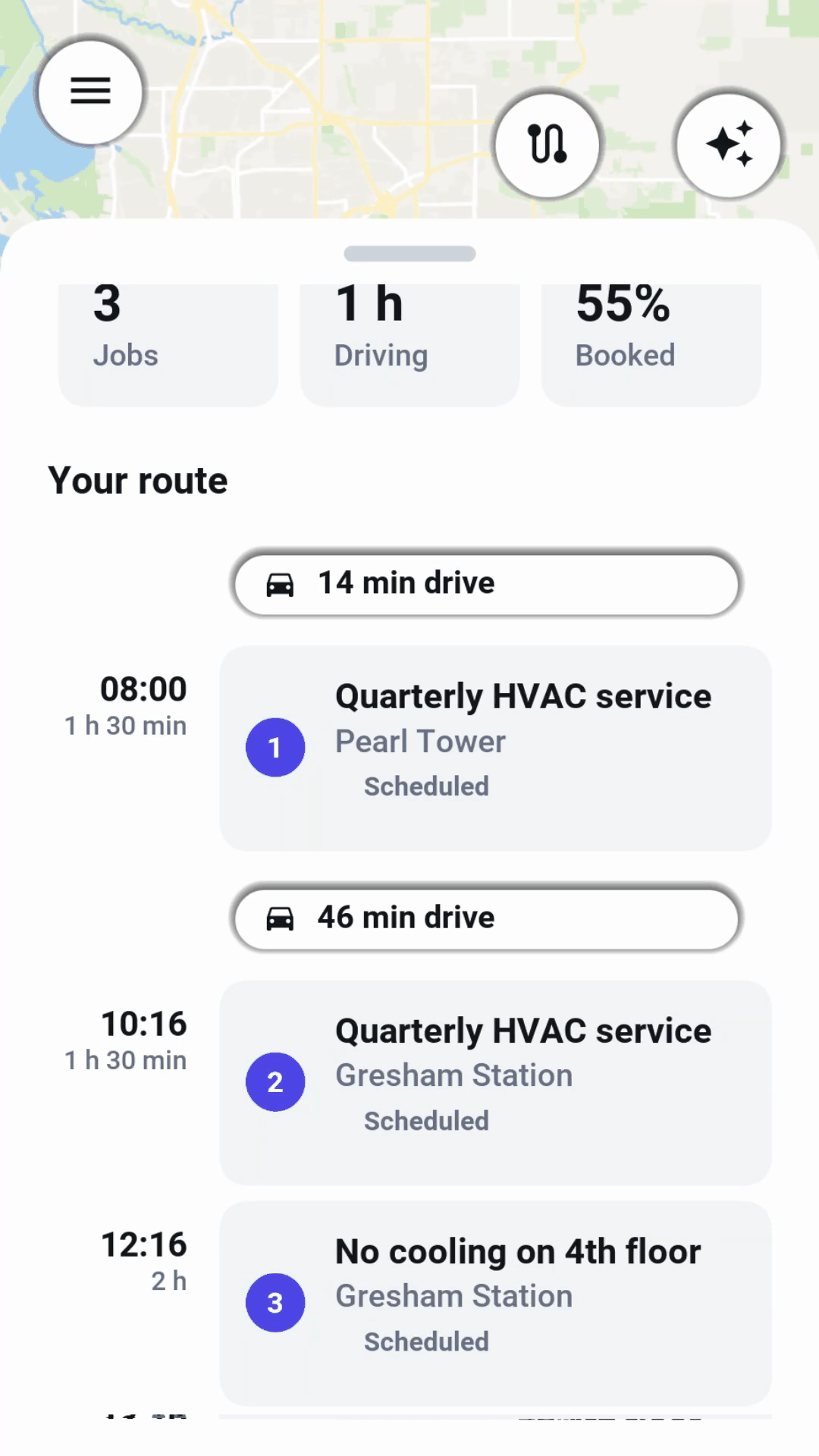
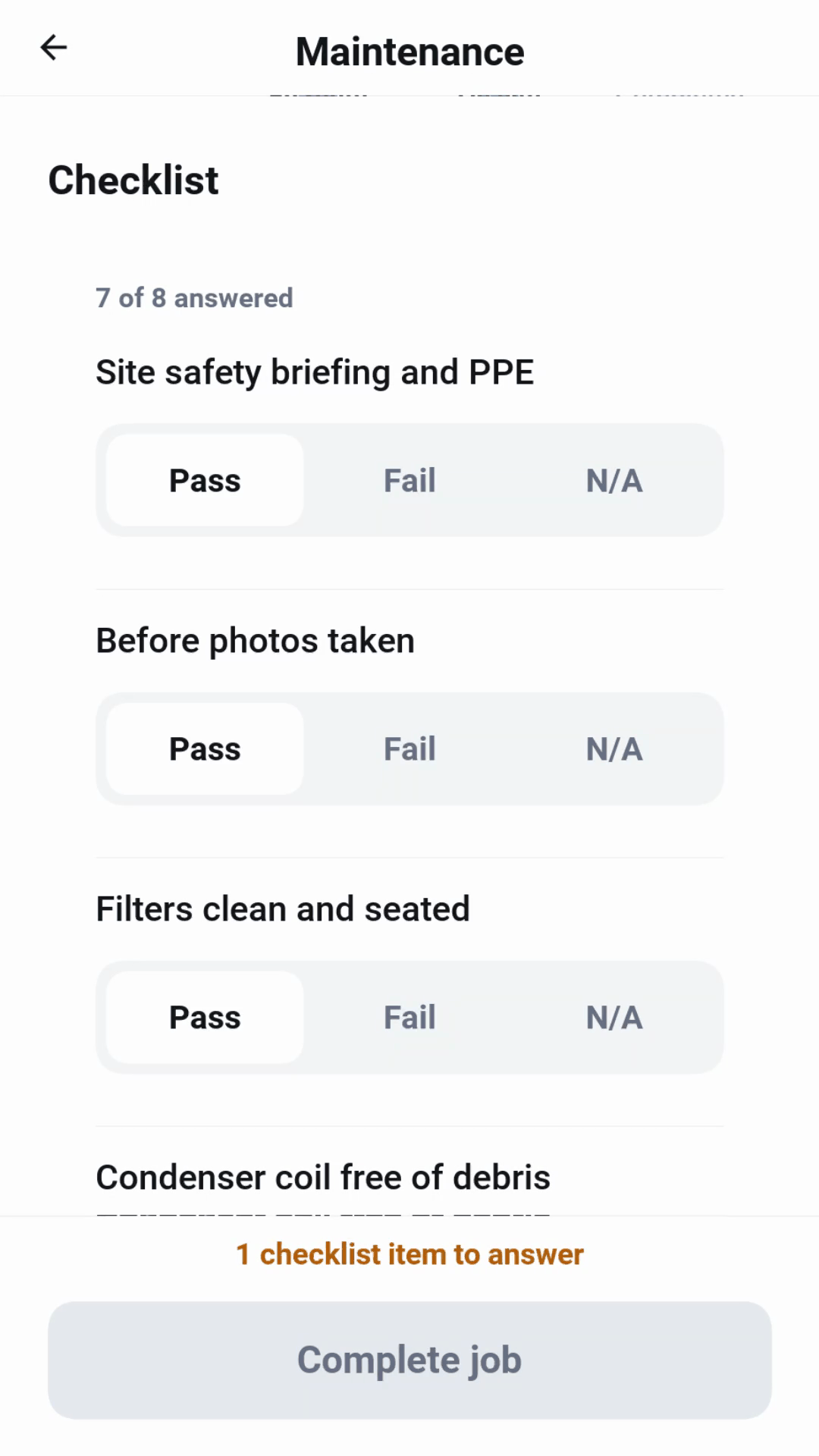
Fieldline is a complete, full-stack field service and inspection application in Java. Technicians open their day as a route on a map, drive to each job, work through its checklist, photograph what they find, ask the assistant what is wrong and have the customer sign on the screen. Dispatchers see the whole crew on a timeline, a Gantt chart and a map, drag work between people, and let the optimizer plan the week. When someone is out, the plan is repaired around them, moving as few jobs as it can. The same project serves HVAC, electrical, plumbing, elevator, solar and fire-safety contractors, and inspection teams. Use it to build your own field service app with Codename One.
Generate your project · Read the user’s guide · Browse the source
In the Initializr, choose the Fieldline field service template, set your application name and package, and generate the project. The application source is licensed under MIT-0: you can modify it, use it commercially and keep your changes private without royalties.
What comes with the application?
| Part | Included workflows |
|---|---|
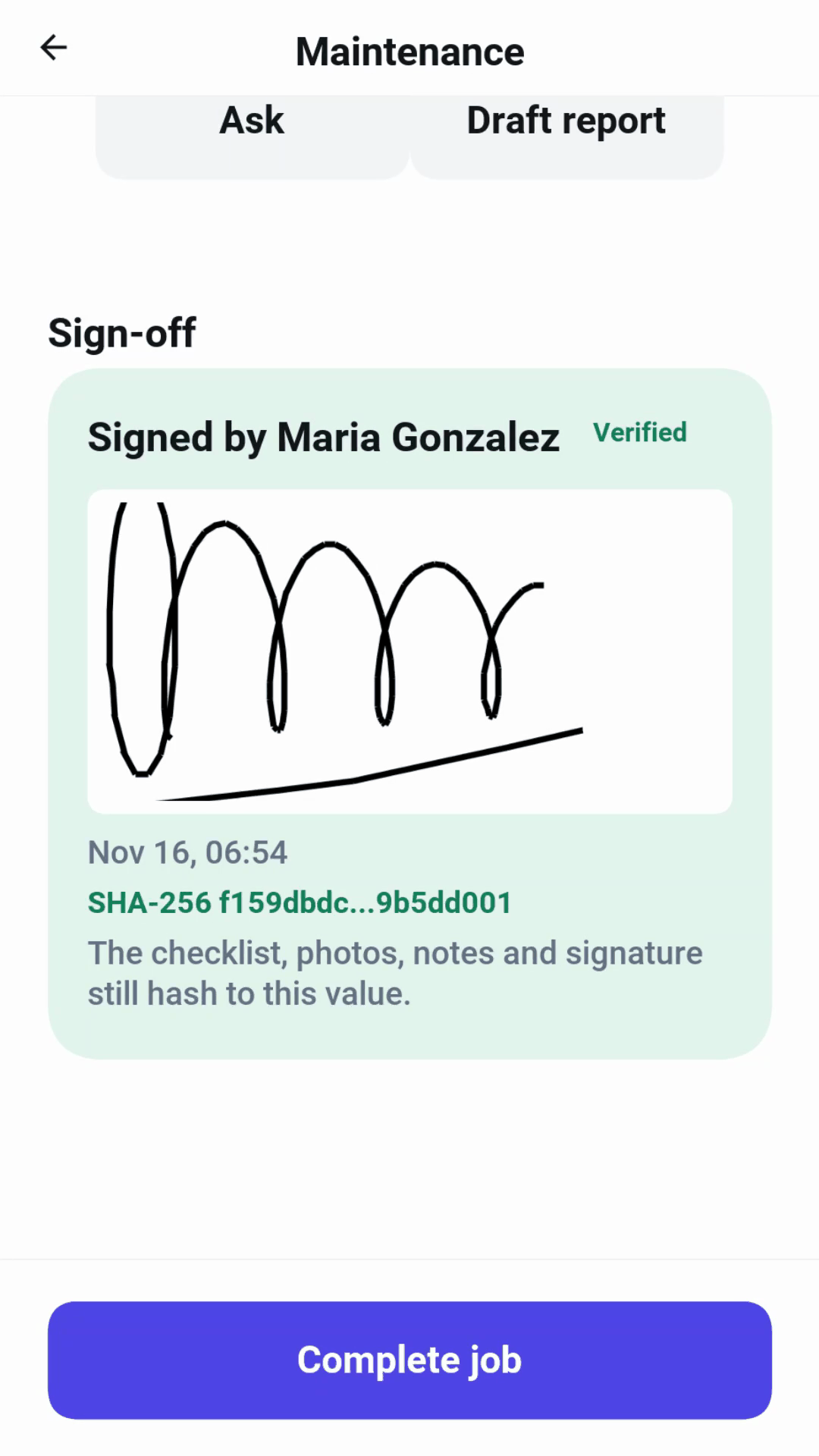
| Technician | The day as a numbered route on a map with travel time between stops, start driving, check in on site, a checklist that saves as you go, photos with AI diagnosis cards, notes, a drafted report, a customer signature sealed with a hash, working hours and limits, time-off requests, and jobs added to the phone’s calendar |
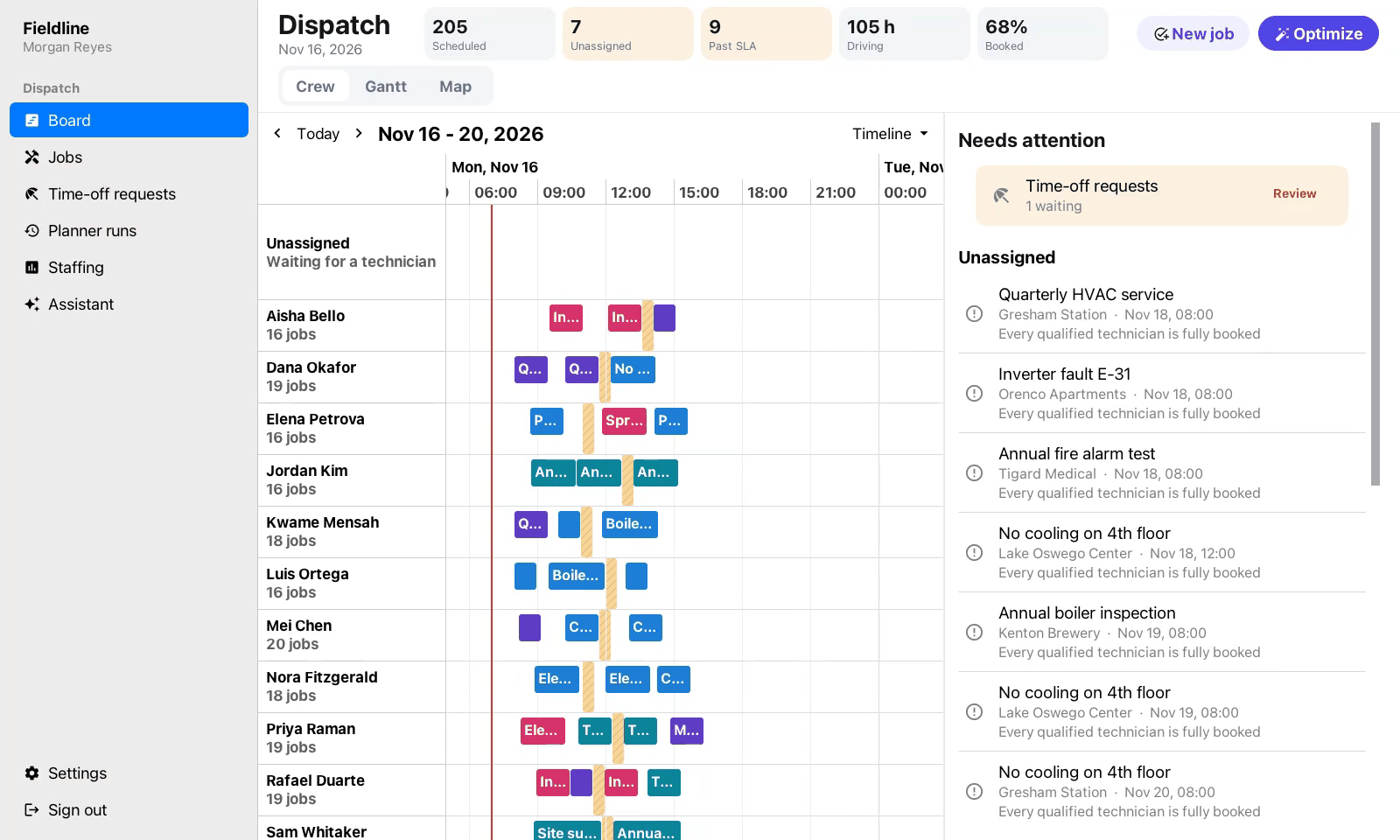
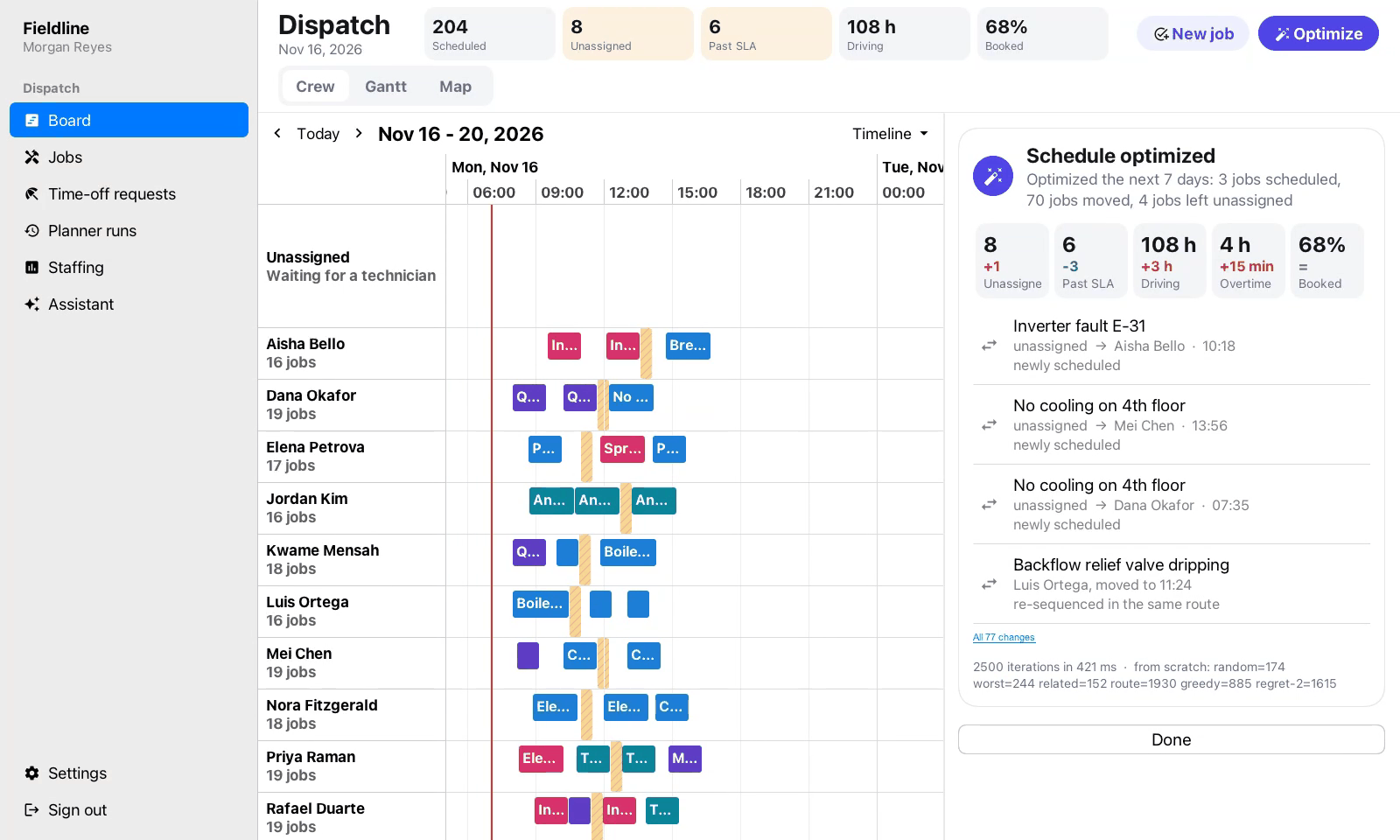
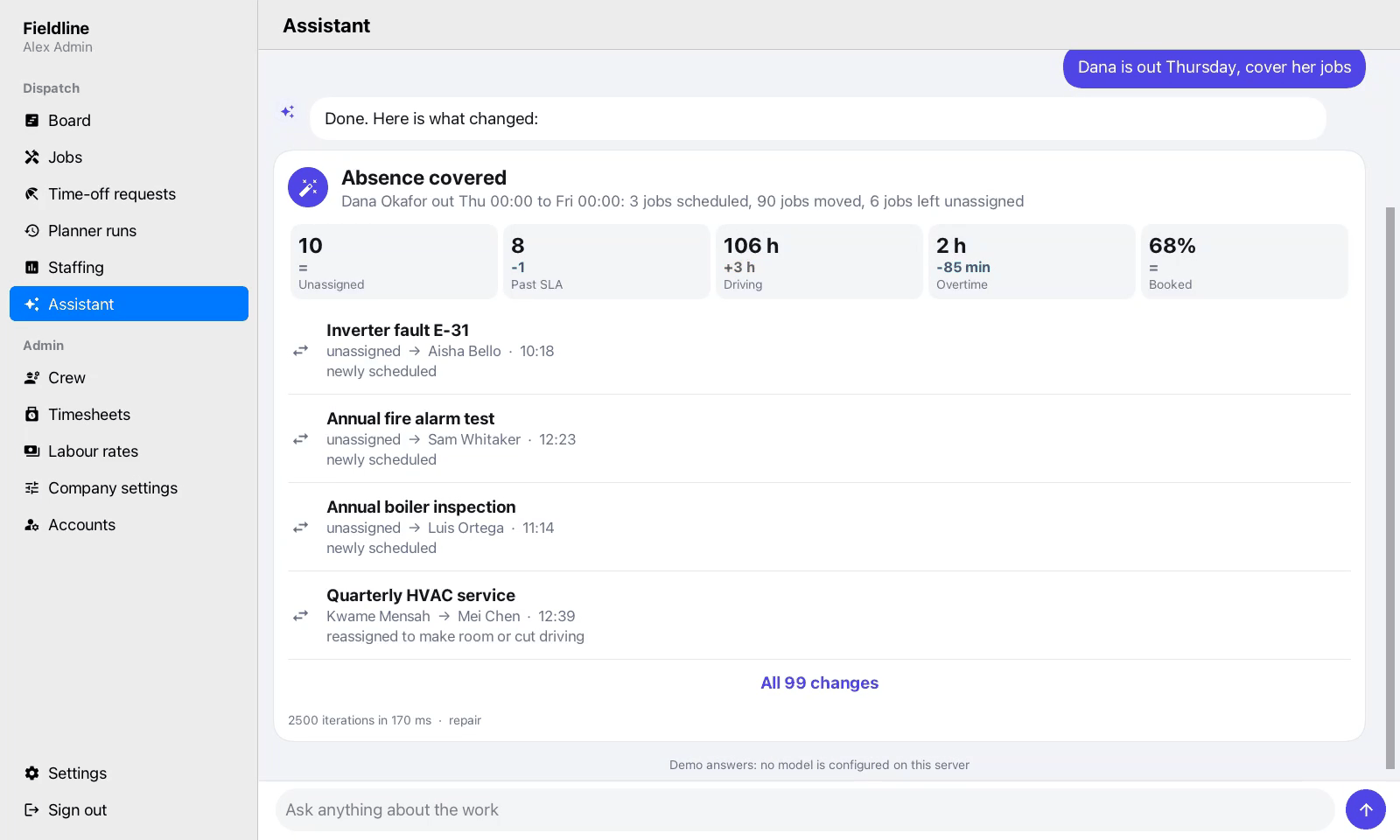
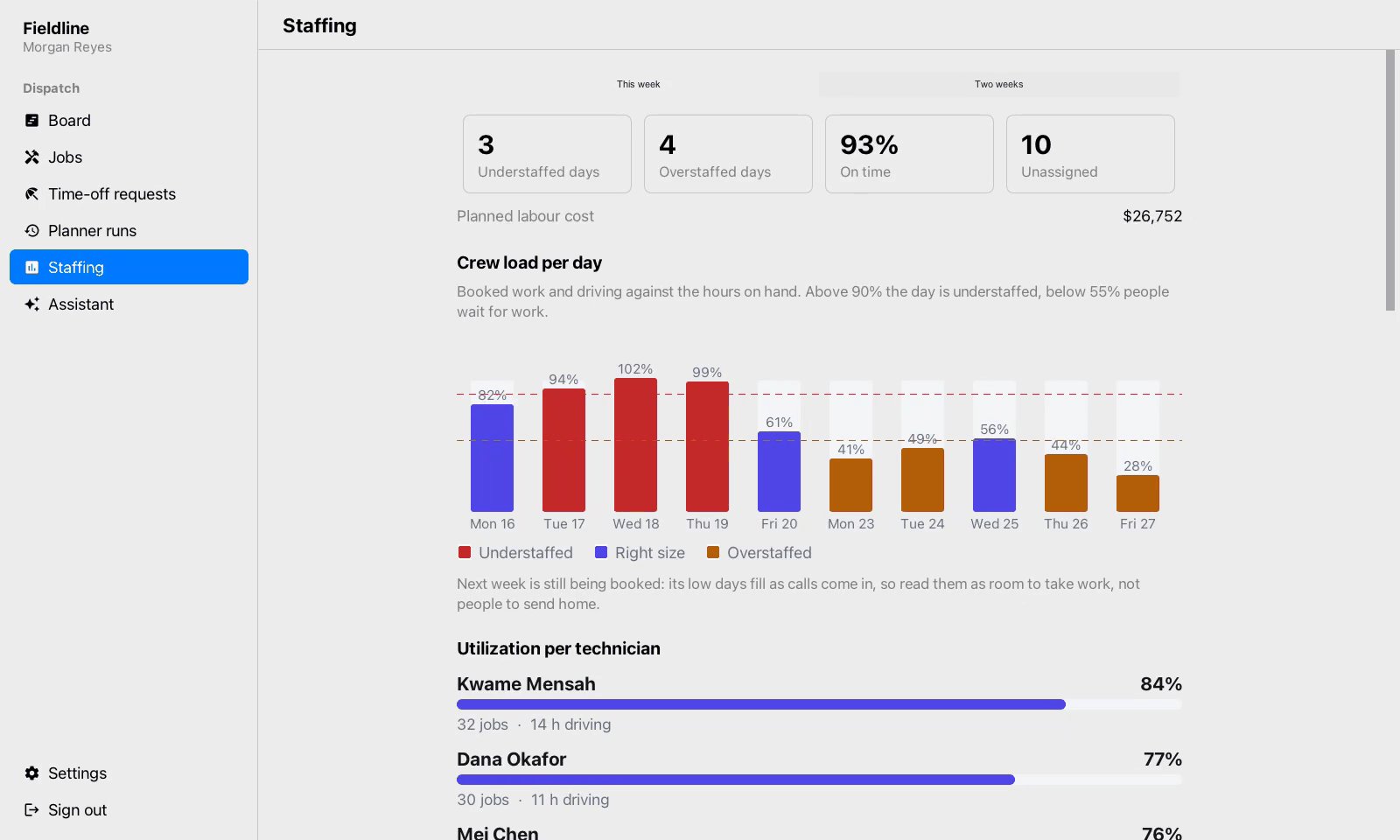
| Dispatcher | A crew timeline, a Gantt chart against the last plan and a map of the crew, drag to reassign with every constraint checked before it is applied, new jobs placed automatically, an absence covered in one tap, the time-off queue, and every optimizer run with what it changed and why |
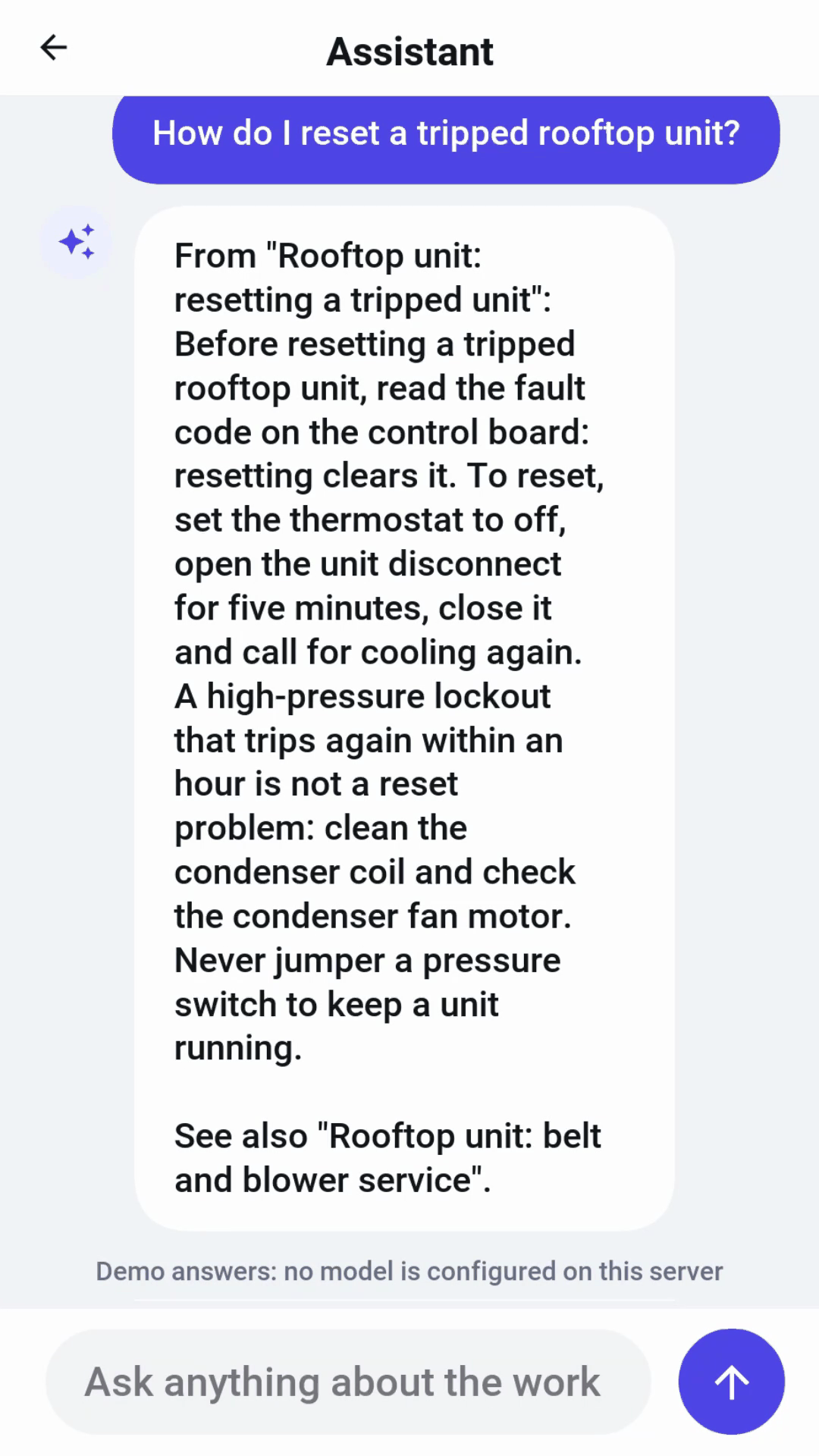
| Assistant | Diagnosis of a photo against the equipment and the checklist, answers about the job in hand, a drafted inspection report, and a dispatcher’s assistant that re-plans when asked in plain words |
| Scheduling engine | Regret insertion, then adaptive large neighbourhood search over skills, working hours, time windows, time off, maximum drive and weekly hours, travel time and overtime, with a seeded search that gives one plan for one seed, and a repair that keeps work in place when the day changes |
| Java backend | Accounts and roles, technicians and availability, sites and jobs, checklists, photos and signatures, the optimizer runs, the assistant behind the server’s own key, push notifications and the live channel |
| Shared code | API contracts and data classes shared between the client and server |
The account’s roles decide which screens a person sees. The same client project targets iOS, Android, desktop and the web, and the server runs on SQLite, PostgreSQL, MySQL and MariaDB.
From first run to customization
- Run the project. The development profile needs nothing installed: an in-memory database, a demo contractor with a crew of twelve and a week of jobs around Portland, demo accounts for every role, and an assistant that answers from built-in rules.
- Try every role. Sign in as
[email protected]to work a day, and as[email protected]to run the board. The password isfieldline-demo. - Customize and deploy. The scheduling engine is a module of its own with no dependencies, so its rules and weights change without touching the app or the server. Give the server a model key and the assistant calls a real model; the key stays on the server.
What does a live business still need?
Fieldline supplies the connected application and its source. Running a business on it also requires your own hosting, a routing service if straight-line travel times are not good enough, a key for the AI model, push credentials, and the checklists and equipment of your own trade.
Other full-stack samples
Slate is appointment booking, Pulse a fitness studio, Savor a food-delivery service, Wayline a ride-hailing service and Bastion a security-first bank, all on the same architecture.