Latest posts from Codename One.
Blog
Insights, release updates, tutorials, and engineering notes from the Codename One team.
Port Support You Can Trace Back to a Green Test
“Supported on iOS, Android, desktop, and web” sounds useful until you need one method on one target. Does WebSocket work on watchOS? Which Linux architectures do we build? Was the JavaScript media test green this week, or did somebody update a table six months ago and forget it? PR #5389 turns those questions into the Codename One Port Status page. It maps 49 user-facing feature groups across 10 portability targets to current conformance results, environment data, skip reasons, and the date of the run. ...
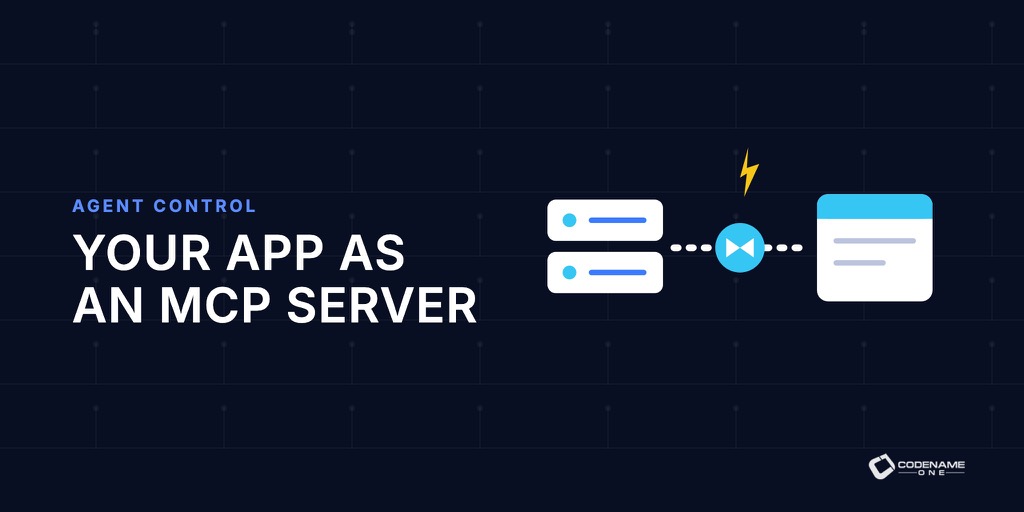
Your Codename One App Can Be an MCP Server
Yesterday’s accessibility work created an immutable tree that describes what is on screen, what each item means, and which actions it supports. VoiceOver and TalkBack consume that tree for people. PR #5377 lets an agent consume it too. The JavaSE port can expose a running simulator or Codename One desktop tool as a local Model Context Protocol server. Codex, Claude Code, Claude Desktop, opencode, or another MCP host can inspect the current form, find a field by label, enter text, activate a button, and call tools published by the application. ...

Accessibility Semantics: The UI Tree You Cannot See
Accessibility has become personal for me. I am getting older, and large type is no longer an abstract preference somebody else needs. It is how I read a phone comfortably. I worked with accessibility experts at Sun Microsystems and learned how deep the problem goes. A label is the easy part. Real accessibility needs roles, values, ranges, actions, traversal order, live announcements, collections, focus, platform conventions, and a way to test all of it. That complexity is why full Codename One accessibility support sat dormant for a decade. ...

Widgets, Live Activities, and Dynamic Island From One Java API
Widget support was one of the earliest Codename One requests. We dismissed it for years because a widget must render while the application UI is not running. A normal Codename One Component needs the application renderer, event dispatch thread, and live object graph. A home-screen widget gets none of those. The missing piece had been under our nose for a decade. Steve added background processes so an app could refresh data without showing its UI. That solves the update side. The rendering side becomes possible once the widget is data rather than a live component. ...

Codename One Settings Is Now a Standalone Tool
Codename One Settings used to be a screen inside the old GUI Builder jar. It edited project properties, managed accounts, opened signing workflows, monitored builds, installed extensions, and accumulated every job that did not have a better home. PR #5359 replaces it with a standalone Codename One desktop application. It does fewer things, which is the point. One command, one project Run the new tool from a Codename One Maven project: ...

Own Your Pixels: Native Fidelity on Your Schedule
An iOS or Android update can change a screen you shipped without you changing a line of code. If your app builds its UI from UIKit, SwiftUI, Compose, or Material widgets, Apple or Google owns those widget implementations. Codename One does something different. It statically links our lightweight component implementation into your native app. The UI you test is the UI your users keep after the next OS update. An update can still break a platform API or permission contract, but it cannot swap our button implementation for a new one. ...

Store Submissions As Code: App Store, Google Play, And Huawei AppGallery
This closes out the release week. Saturday’s certificate wizard got your app signed. Today’s feature handles what comes after the build finishes: uploading the binary, filling in the release notes, updating the listing, and doing it on every store where your users are. PR #5353 covers the client tooling; the heavy lifting lives in the build cloud. After The Build Turns Green A release isn’t done when the build turns green. Someone still uploads the .ipa to App Store Connect, pastes the what’s-new text into two or three web consoles, re-uploads screenshots because the store flagged one, and repeats the ritual per locale. For a single app it’s an annoying hour. For a team maintaining ten apps across App Store, Google Play and AppGallery, it’s a part-time job that produces nothing except copy-paste errors. ...

AR And VR In Java: ARKit, ARCore, And A Virtual Room You Can Debug
This week’s release post was about making the VM fast. Today’s post is about pointing that VM at the real world. PR #5335 adds two new core packages: com.codename1.ar for augmented reality on ARKit and ARCore, and com.codename1.vr for stereo rendering and 360 media on our portable GPU pipeline. The Problem With Writing AR Code AR development has a miserable inner loop. The code only runs on a device, the interesting states are the ones you can’t reproduce on demand (tracking loss, a plane that merges into another, a reference image entering the frame), and every debug cycle involves standing up and pointing a phone at your floor. Add a second platform SDK with different classes and coordinate conventions, and simple ideas become week-long jobs. ...

The Certificate Wizard Is Now A Standalone App, And It Stopped Impersonating You
Yesterday’s release post covered the ParparVM performance work. Today’s post is about the tool most iOS developers meet before they ever see their app on a device: the certificate wizard. PR #5339 rewrites it as a standalone desktop app with a different way of talking to Apple. Why The Old Wizard Kept Breaking Apple signing needs a pile of interlocking assets: a signing certificate, a bundle ID, registered devices, a provisioning profile that ties the three together, and a push key if you use notifications. The wizard’s job has always been to create all of that so you don’t spend an afternoon in the Apple developer portal. ...
How We Beat HotSpot Performance (By Cheating, But Not Like That)
No, we didn’t cheat in the benchmark. At least I hope we didn’t. Every optimization in this story was gated on bit identical output checksums against HotSpot, and the harness refuses to print a ratio when a checksum differs. If anything, this post is about how good HotSpot actually is. We tilted the table in our favor in every way we could, we hand tuned C code, and we still only beat it on some benchmarks. Getting there was a genuine struggle. If you want to understand the nuts and bolts of what your Java code costs, and the tradeoffs each runtime picks, I hope this is a good read. ...
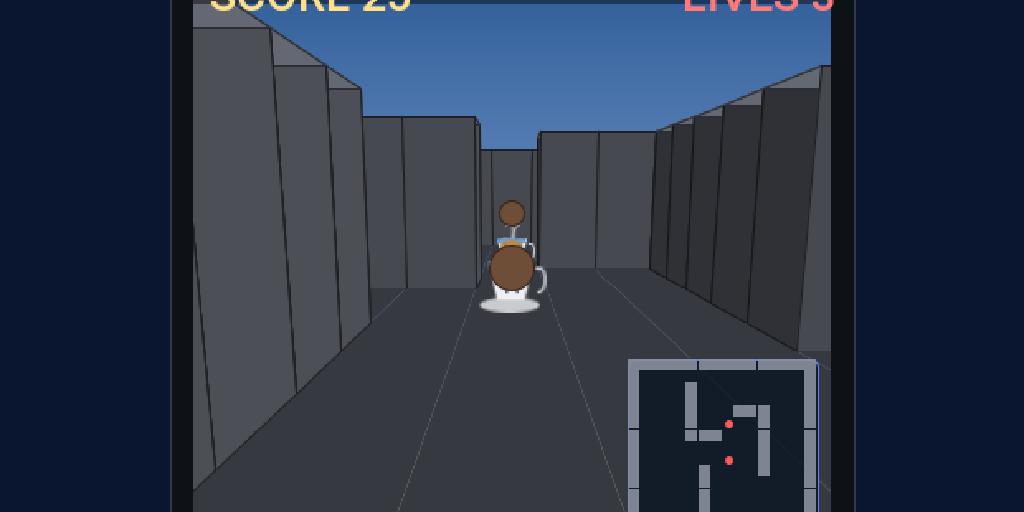
Game Builder Tutorial 3: Build a First-Person 3D Dungeon
The final tutorial takes the same data-driven pattern from Tutorial 1 and Tutorial 2 into 3D. Duke’s last adventure sends him underground: Crypt Walk, a first-person dungeon of stone corridors where the tea cups have invaded his coffee break. He hunts them through the maze and fires coffee beans to smash them, while the walls box him in. The headline difference from the 2D tutorial is what happens at runtime — instead of sprites in a Scene, each element becomes a GPU-rendered Model under a perspective camera with lighting. You author the same way; the runtime renders it in 3D. ...

VideoIO, PCM Mixing And Timed Whisper Captions
This release turns media from “play a file” into “build a file.” PR #5315 adds VideoIO, a cross-platform video subsystem that can encode app-rendered frames and audio into a standard video file, then decode an existing clip back into exact RGBA frames and PCM audio. PR #5317 adds AudioMixer, a sample-accurate PCM timeline. PR #5319 adds timed Whisper transcription segments with SRT and VTT output. ...