Latest posts from Codename One.
Blog
Search the blogInsights, release updates, tutorials, and engineering notes from the Codename One team.
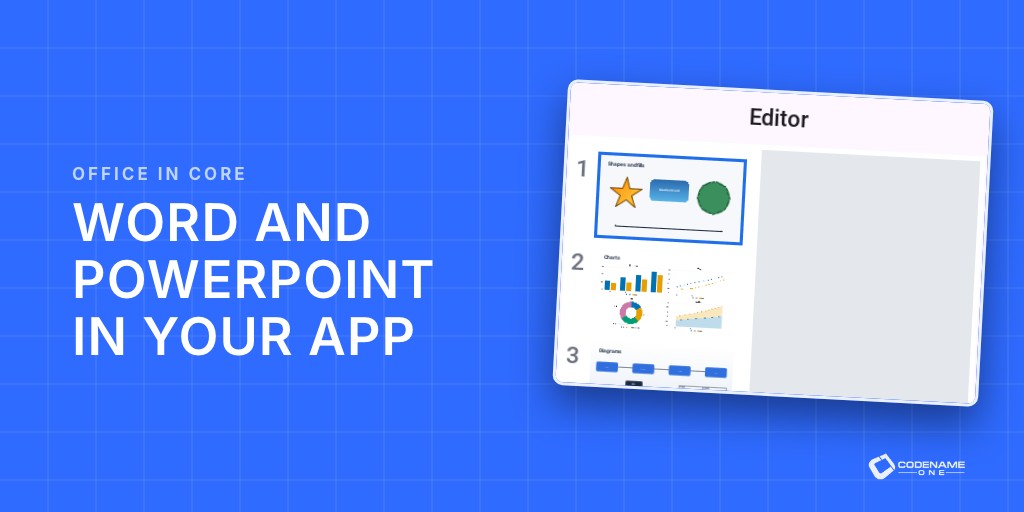
Open, Edit, Spell Check and Present Word and PowerPoint Files Inside Your App
Last week we put spreadsheets with live formulas in core. This week the other two office formats joined them. Your app can now open a Word document, let the user edit it with spell checking, and save it back as DOCX or PDF. It can open a PowerPoint or Keynote deck, edit a slide, and present it with a clock and speaker notes. On iOS, Android, the desktop and the web, from the same code. ...
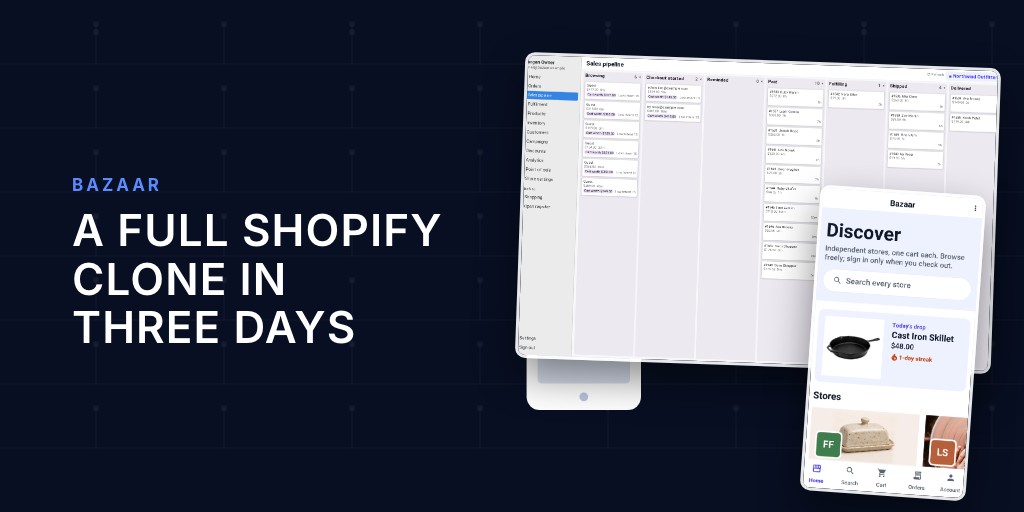
We Built a Full Shopify Clone in Three Days
Two weeks ago I wrote that Shopify was wrong to dump React Native for two native codebases. Plenty of people told me it’s easy to criticize a company that ships. Fair. So I put my money where my mouth is. We built Shopify. Not the mobile app. All of it. A shopper app. A merchant back office on phone, tablet, desktop, and web. A point of sale that keeps selling when the network dies. A marketplace admin. A server-rendered web store that search engines index. A blog. An app platform with OAuth installs, webhooks, UI extensions and checkout functions. Inventory across locations, invoicing, B2B price lists, subscriptions, loyalty, marketing journeys and an AI assistant. One Java codebase and one Java backend, running on SQLite, PostgreSQL, MySQL, or MariaDB. ...
Brickyard: Launch Your Own Game Platform, With the Studio Inside the App
The biggest game platforms of the last decade aren’t games. They’re places where players build games for each other. The insight is that the studio and the game are the same product: the kid playing an obstacle course today is the one building the next one tomorrow, on the same device. Brickyard is that platform as a Codename One template. One app to browse experiences, play them in 3D with friends, chat, and build them in a full studio, on a phone, a tablet or a desktop. Publish, earn, and run it on your own authoritative multiplayer server. It uses nearly everything we’ve built: the code editor, the AI tooling, the gaming API, and two new pieces from this week, portable shaders and 3D audio. ...

Flowcharts, Node Editors and Kanban Boards Are Now Standard Components
Show a business user their process as a flowchart and they understand it in ten seconds. Show them the same process as a table of states and they ask for a meeting. That’s why every serious business app ends up needing a diagram: an approval flow, an org chart, a network map, a pipeline of deals. And in almost every framework, that diagram is a third party extension, a commercial license, or a web view running a JavaScript library inside your native app. ...

Fieldline: Launch Your Own Field Service App, With a Scheduler That Plans the Week
One of my first jobs was at a scheduling company. I wrote heuristic algorithms that assigned work to people under constraints, and drew the result as Gantt charts that planners stared at all day. It’s a brutal field. Every customer has a rule nobody told you about, a technician who can’t work Tuesdays, a site that only opens at nine, a van that can’t carry two jobs’ worth of parts. The optimizer that handles all of it is the product, and building one used to take a team several years. ...
Invoices, Tickets and Reports: Generate, View and Print PDFs From One Java Codebase
Every business app ends at a PDF. The invoice, the boarding pass, the signed work order, the monthly statement, the report the regional manager prints and brings to a meeting. And every team I know solved it the same painful way: a server-side library for generating, a different viewer per platform, a web view on Android that renders differently from the one on iOS, and a print button that works on one of them. ...
Build a Multi-Tenant SaaS Backend That Can't Leak One Customer Into Another
The worst bug a SaaS company can ship is one customer seeing another customer’s invoices. It doesn’t crash anything and no test fails. A support ticket arrives, then a lawyer. It almost always comes from the same place: one query, somewhere, that forgot the WHERE tenant_id = ?. This week the Codename One backend refuses to run that query. It also picked up the rest of what an enterprise customer asks about in the first meeting: GraphQL, SAML single sign-on, LDAP and Active Directory, object storage on every major cloud, and document and search databases. Friday’s post argued that the baseline for an app moved. This is the baseline for its server. ...
A Million Rows and Live Excel Formulas, Inside Your Own App
My high school finishing exams included a test in Lotus 1-2-3. I’ve spent a good part of my career since then yelling at spreadsheets, and I still use them every day: the company P&L, grocery lists, student attendance. People love to hate them. The world runs on them anyway, because nothing else lets a person who isn’t a programmer build a working model of their business in an afternoon. ...
Why My Kids are Learning to Program - The New Baseline
Type one paragraph into Claude Code or Codex and an agent builds a Codename One app, taps through every screen, draws the icon, signs it, and submits it to TestFlight and Google Play. This week we wired our build cloud straight into that loop, so the whole trip from prompt to store is one conversation. You approve screenshots. You never see a line of Java. You don’t need a Mac. ...
Run an LLM and Whisper on the Phone, With No Server Bill
Most AI features in mobile apps don’t need a cloud model, and paying per token for them is a habit, not a requirement. Summarizing a note, tagging a caption, turning a voice memo into text or filling a form from a sentence is work a half billion parameter model does on the phone: offline, with no per request cost, and without sending your user’s text to anyone’s data center. ...
Windows Kiosks and Command Line Tools, Built From Java
The two kinds of software people least expect to write in Java are the app that owns a panel PC in a shop and the tool you type into a terminal. Both used to be bad fits for the same reason: a JVM to install, seconds of startup, and a runtime that doesn’t own the machine. Codename One compiles your Java ahead of time to C and then to one native executable, so both problems go away. This week that covers locked down Windows kiosks and command line tools. ...
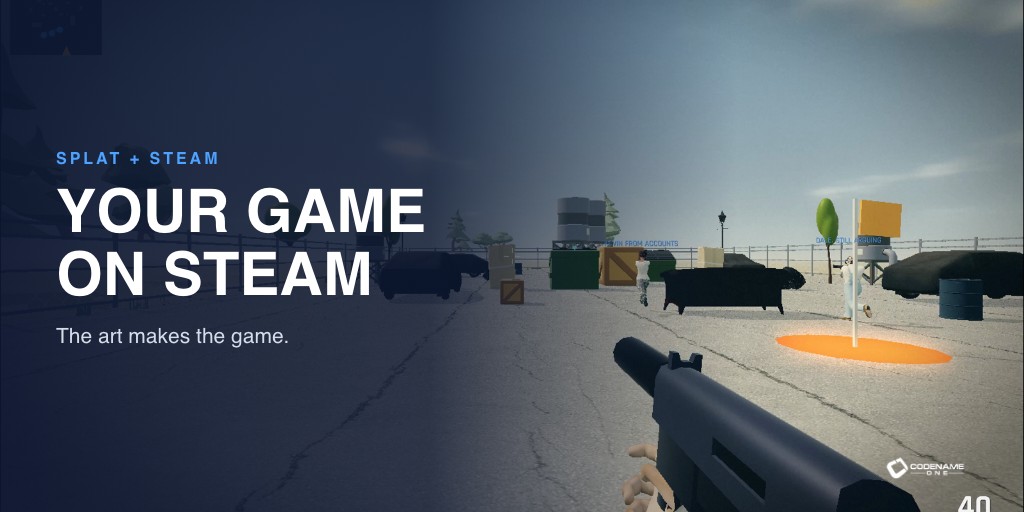
Ship Your Game on Steam, and Why the Art Matters More Than the Engine
The engine is the least important decision in a small game. Art decides whether people play it, the server decides whether it’s fair, and the store decides whether anyone finds it. Splat, our third game template after Skirmish and Dash, is a first person team paintball shooter, four against four, in 3D, online, written in Java with Codename One. It’s the kind of game people assume needs a commercial engine. Watch it first and judge for yourself. ...